


I research how people working on superintelligence learn to make better strategic decisions in less time.
Have you noticed that during the best times in your life, making decisions was easier, better, and faster? Maybe these times were certain days or weeks, with certain projects or people, in past roles, in areas of your personal life, or when you were younger, etc.
During these times, were you “making” every decision through willpower, or were the answers revealed to you through intuition?
This is for people who want more of the latter.
The problem is that usually when people working in AI try to use more intuition, either nothing happens, they spiral in emotions, or it works at first but then it’s mysteriously difficult to keep doing.
Through my research into locally optimal incentives followed by tracking outcomes years later, I’ve learned how to teach AI people to find better answers in less time. (Please doubt claims like this until you see receipts; mine are below.)
One prerequisite is that your external circumstances must be solid. This includes health, sleep, and financial runway.
If there are important decisions relevant to ASI you need to make soon, try the core skill with me one evening. Tell me the shape of what you’re trying to decide:
Or email chris@chrislakin.com.
“I definitely wouldn’t’ve done anything like this without being directed at it by you or spending money. It seems to have already materially improved my life by making my actions more interpretable. Previously there was a contentious relationship with myself, where my ‘other self’ was annoying, not interpretable, hard to steer, and had to be negotiated with.” —Anthropic MTS 2026 September
Receipts
Daniel Tan (coauthor of Emergent Misalignment) was trying to do more alignment research but losing weeks to burnout. Willpower/deadlines would help temporarily but not permanently. In the summer of 2025 we had eight conversations. In the year since, he’s reported that long periods of burnout no longer happen. And as a side effect, he regained ~5 hours per day from distractions (this made it a net time-save for him in about a week.) Details, video

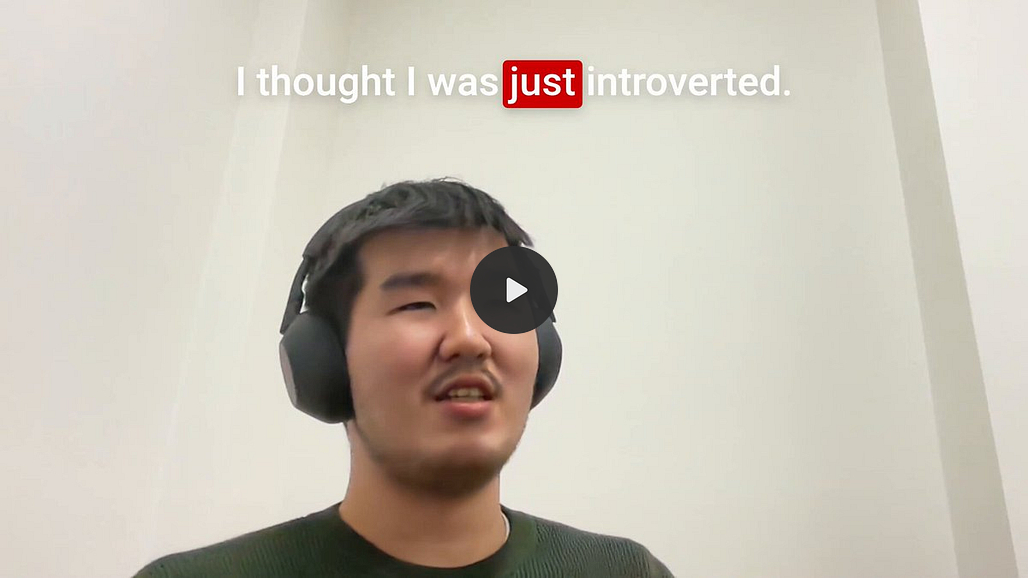

Another lab researcher was trying to share his thoughts and feelings in relationships but kept holding back. Seven years of meditation, 150 hours of IFS, and many retreats helped only somewhat. Within two weeks of our first conversation, he began expressing romantic attraction without delaying. After three more conversations, he started naturally disagreeing with colleagues, being direct with his mom, and texting friends “I miss you” (we never discussed these, so it was generalization not Goodhart). We recorded the video below. A few months later he asked out a girl he liked and entered a happy relationship (image). They’ve been together over a year now. The relationship freed his attention from meditation, so he joined a lab, where he negotiated and stood up for himself, etc. It’s been two years, no relapse.
A frontier lab researcher wanted to share more of his takes but didn’t do it when it involved disagreeing with someone he looked up to. After two conversations in late 2024, he started expressing disagreements to anyone, and even being quite stubborn when the other person didn’t immediately get what he was pointing at. Over a year and a half later he’s still like this. (Reference available iff same lab.)

Posts


Available references:
Anthropic
“I got exactly the results I intended to.” —OpenAI MTS
other frontier labs and AI companies
Daniel Tan (god bless him for being so chill about confidentiality)
people whose work Scott Alexander has written about
Most are private; you probably have to work at the same place. Also, while I no longer work with people outside of ASI, references are available from people like a well-known crypto founder & writer, a founder of $100m+ company, etc.