


There’s this popular idea that socially anxious folks are dying to be liked. Why else would someone be so anxious about how others perceive them?
And yet, being socially anxious tends to make you less likeable… so they must be behaving really irrationally, right?

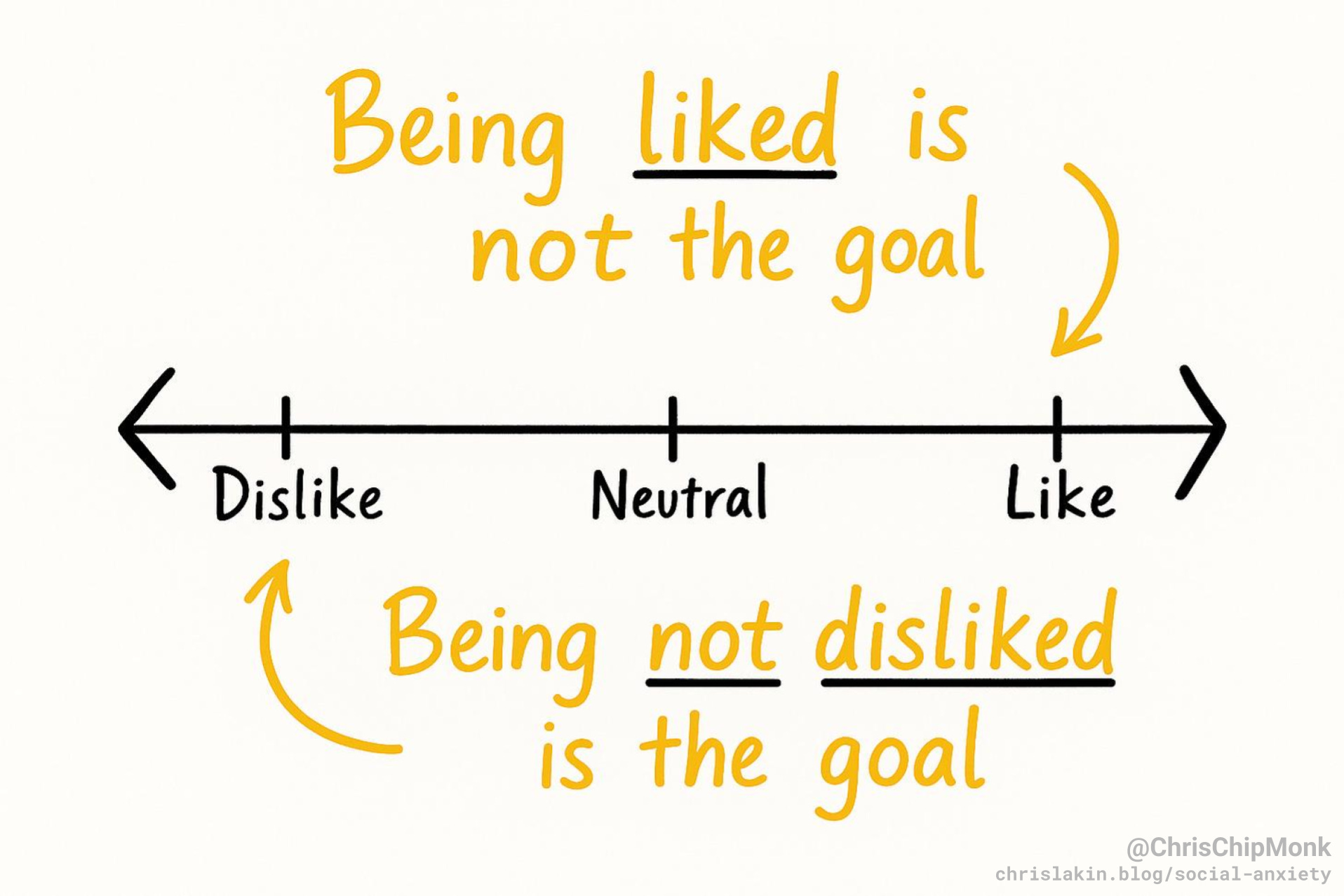
Maybe not. What if social anxiety isn’t about getting people to like you? What if it's about stopping them from disliking you?

When someone feels insecure, they get to stoop and take up less space, become less agentic, make fewer requests of others, maintain fewer relationships, go out less, take fewer risks…
These are pretty bad strategies if your goal is to be liked.
So what if that’s not the goal?
What if the socially anxious are calibrating to avoid being DISliked?
Consider: if you shrink and never make any attention-getting moves, you are less likely to dangerously disappoint others, get into risky conflicts or be seen as a failure, embarrassment, or threat.
Like, yeah, it’s wonderful to do awesome things and have people love you. But you know what’s better than being loved? People not hating you.
a symptom of risk aversion
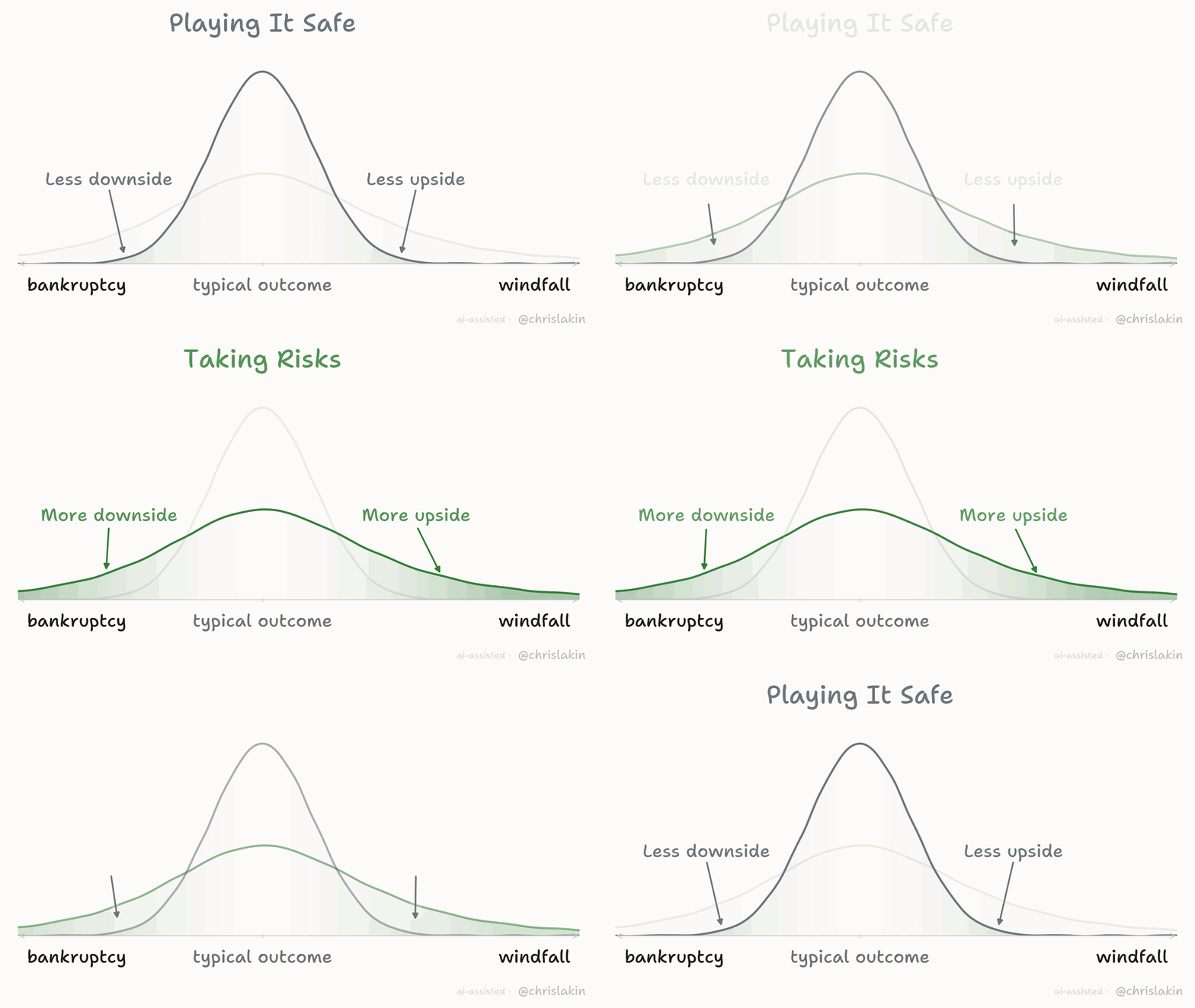
Not a pursuit of potential upside, but an attempt to avoid downsides.
A few examples:
1) When you feel financially insecure, you’re not optimizing for windfall as much as you’re optimizing for not going bankrupt. You avoid risky bets with higher EV in favor of safer, more predictable options, even if they offer smaller returns. The goal is to keep you fed, not to make you rich.
2) Reversely, countersignalling is a demonstration of safety in close relationships. In Scott Alexander’s Friendship is Countersignalling, he describes an interaction he has with a friend:
Becca: What are you doing here? I figured they’d have locked you away in the psych ward for good by now.
Scott: Nope. And what are you doing here? You haven’t killed off all your patients yet?
Becca: Only person in this hospital I might kill is standing right in front of me.
Scott: Be careful, I’m armed and dangerous *picks up a central line placement practice set menacingly*
The security of good friendship diffuses your anxiety about making a social faux pas and enables you to take more risks.
Your risk profile
What if you’ve been operating pretty rationally this whole time, but not for the outcome you thought you were optimizing for?
What if the symptoms of social anxiety aren’t failures of a system trying to be liked, but successes of a system trying to avoid being disliked?
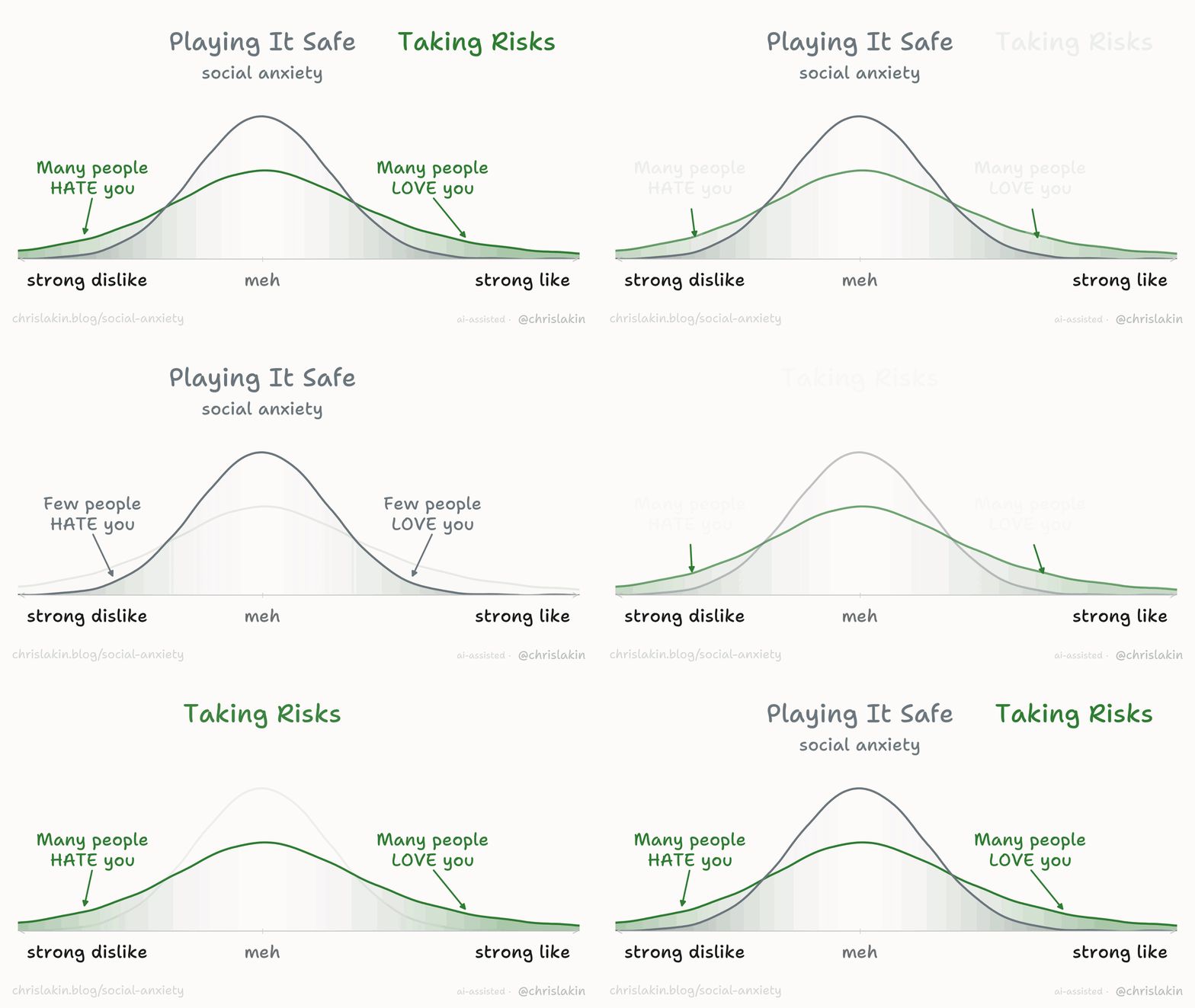
Social anxiety isn’t about being liked.
About | Twitter | Finding bottlenecks for people making superintelligence go well
This is one of those “obvious” things that nonetheless needs to be pointed out because people are often poor at understanding their own behaviour
This is spot on—speaking from experience.