


Many people I respect misunderstand addictions: they believe they’re addicted “to” scrolling, vaping, overworking, etc.—instead of recognizing addictions as strategies.
Because of this, they’re surprised when their attempts to curb addictions don’t work: they either fail, and come to believe that the “lack willpower”, or they succeed at dropping one addiction, but find themselves picking up new ones:

The Locally Optimal view of addictions is that addictions function as anesthesia. As strategies for managing suffering.
Like, if you’re in pain, it’s often wise to employ some method of anesthesia.
…which also means that if you’re in pain and you forcibly remove your addictions (anesthesia), either you’re going to get overwhelmed, or you’re going to find another way to numb.


Addictions help with suffering because anesthesia helps with suffering.
Therefore, the way to unlearn all addictions simultaneously is to remove the underlying suffering. With suffering, there is a sort of “addiction whac-a-mole” that happens. Without suffering, there is no need for any kind of anesthesia.
Addictions are one of my preferred measures of suffering and internal conflict. If you have addictions you dislike, there’s probably suffering in your system. It’s common not to realize that addictions are present to anesthetize deeper pain. (I’m sorry.)
But this is a good thing.
In my research, I’ve specialized in working 1:1 with people who are situated such that they can remove underlying suffering without risking terrible consequences. But many people aren’t in this position yet. For these people, addictions often are the best they can do to manage the current suffering.
This is why I get concerned when I see advice that blindly recommends people tear down their addictions. Hey, Chesterton’s Fence! All things considered, addictions like scrolling can be some of the best copes for many people!


Note: The most virtuous copes are community and relationships. The problem is that they’re also the least convenient.
Meanwhile, when underlying suffering disappears, you’ll see addictions disappear without using willpower:
“On an average day [before our work together] I might do around six to eight hours of work and then five to six hours of just going home and vegging out in some form... watching YouTube... And [since then] I do it a lot less. A lot more of it is just talking to friends or having thoughtful conversations.” —alignment researcher
Until our 3mo follow-up, I didn’t even know he’d *had* addictions.
Have you ever noticed that you didn’t get addictive urges during the times you were happiest? — in a past role, in a past relationship, around people you love, while on vacation, after meditation or psychedelics, when younger, when life was more stable, when you felt differently about yourself… Perhaps it was because there was no suffering for which you needed anesthesia.
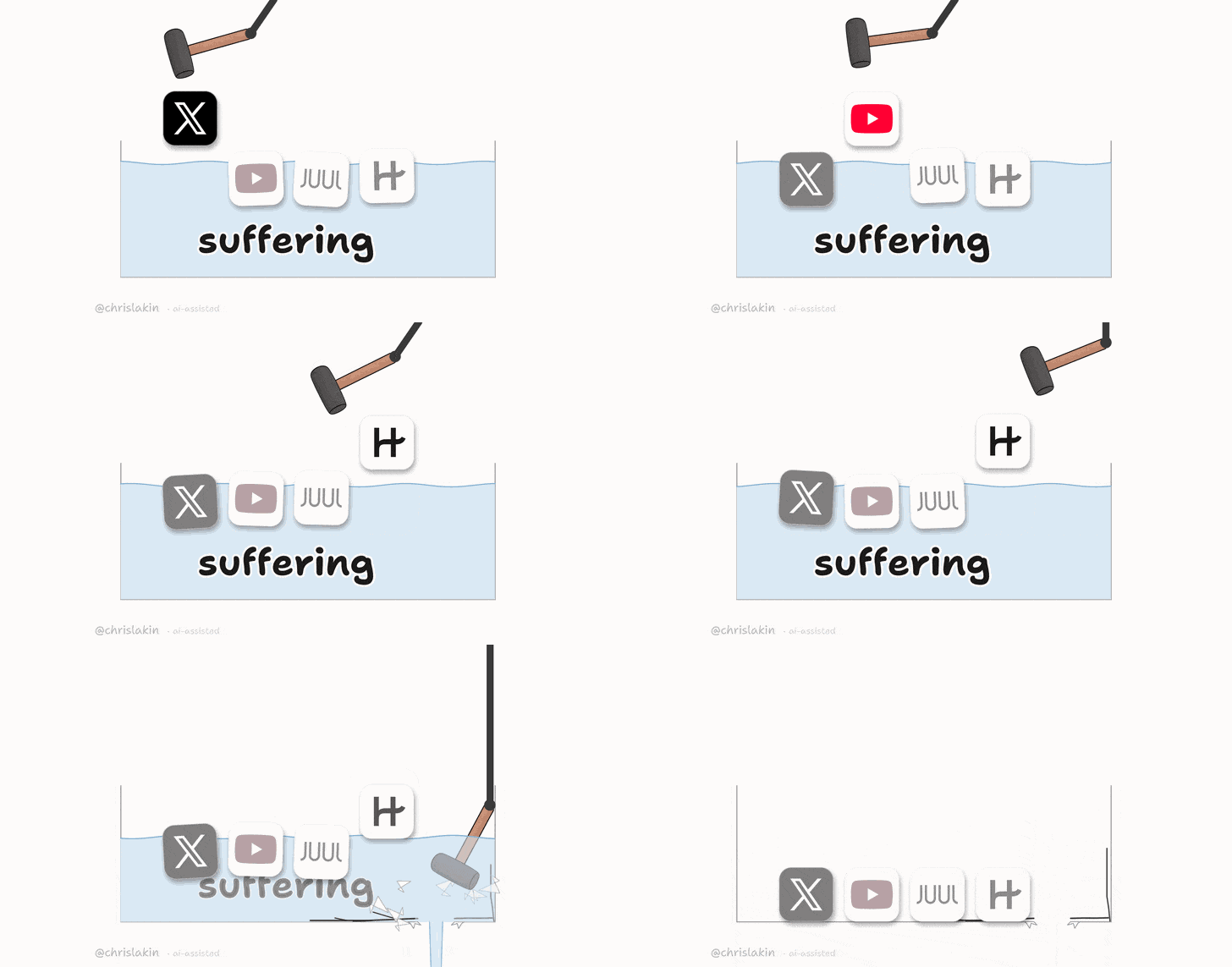
Addictions are anesthesia
About | Twitter | Finding bottlenecks for people helping superintelligence go well
I had unmedicated ADHD and bad anxiety for a decade and used alcohol to cope. I finally quit drinking but started smoking weed instead because I still can't tolerate modern life completely sober. The only thing that has ever actually helped me with this is magic mushrooms, but the positive effects are unfortunately temporary and I can't just be high on them every day. At no point in my various drug uses was I ever under any delusion that I was doing anything but numbing my emotions because often moving through the world was agony for me. The alcohol shut my brain and all those anxious thoughts off for a while which gave me peace. It doesn't matter what your vice of choice is, almost everyone has some kind of addiction that they use to numb the pain of being alive. The only long term solution is to love and accept yourself regardless of your external circumstances. But this is extremely difficult to do in a hyper capitalist society that treats you like garbage if you aren't rich or famous, so pretty much everyone feels they are lacking and filling that perceived void with other harmful behaviors. The West has an addiction crisis way worse than anybody wants to actually admit. Opioid deaths are just the tip of the iceberg. I know very few people who are genuinely sober and happy. If you somehow forced the American population to be 100% sober for a year I guarantee you the suicide rate would skyrocket. Our culture is deeply sick and I have no idea how we even fix it at this point.
This is great. As a therapist my shorthand has always been “medicating something”, but anesthesia has tighter implications. Well done.